

You've got eight new starters arriving on Monday and a principal contractor asking for proof of training by Friday. Some workers have Safe Pass cards, one will operate plant, and another hasn't worked on this site before. Booking everyone onto the cheapest available course won't resolve those different needs.
Start with the job, not the course catalogue. Match the training to the worker's tasks, then decide what evidence you need before they arrive. A booking confirmation, a completion certificate and a recognised training card don't prove the same thing.
These construction safety training courses and production options serve different purposes: baseline awareness, supplementary learning or instruction built around your own procedures. Compare format, certification, location and audit evidence before price. For paid courses, confirm the current total at booking rather than treating an advertised fee as a complete mobilisation budget.
Table of Contents
- 1. Home Bespoke Training Course Production
- 2. WorkSafe Training Ireland
- 3. National Irish Safety Organisation (NISO)
- 4. Shorcontrol Safety
- 5. Ireland T&T
- 6. Irish School of Motoring (ISM)
- 7. Health and Safety Authority (HSA) Online Construction Safety Course
- How the seven construction safety training options compare on focus, format, listed price and best use
- Build Your Shortlist Around Proof, Not Just Price
1. Home Bespoke Training Course Production
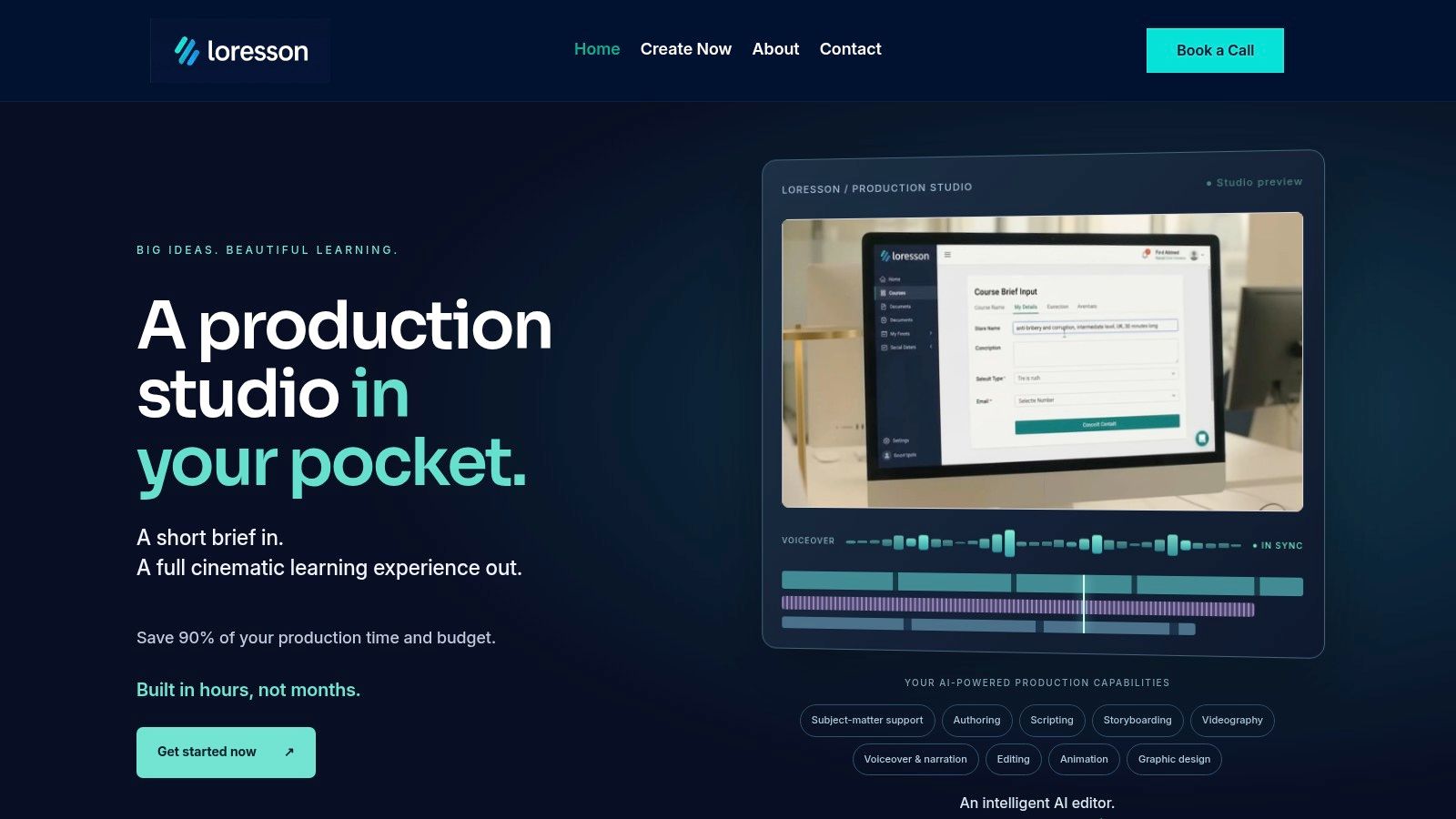
Best for turning an approved workplace procedure into training, rather than buying another general-awareness course.
Loresson is our bespoke production service, built by Acorn Star, an accredited European training provider. We take your learning need, audience, jurisdiction and agreed instructions, then develop scripts, storyboards, narration, graphics, assessments and coordinated course media. Existing procedures and brand guidance help make the content specific, but you don't need a finished script to begin.
You can choose an editor-ready handoff or a finished, branded course, with LMS preparation included in Premium. Premium also includes specialist HSEQ review and sign-off, final assembly and workplace-specific conversational roleplay. Production can take hours rather than months, but the scope and timetable belong in the agreed quotation.
What makes the evidence useful
For a construction induction, the useful material isn't just the finished video. Keep the approved script, learning objectives, procedure references and assessment logic alongside the deployed version. That lets a reviewer establish what workers were taught and which instructions applied when they completed it.
- Strong fit: Site induction, onboarding and procedure training that must reflect local arrangements.
- Main limitation: Bespoke content doesn't become SOLAS Safe Pass or CSCS certification just because it explains construction hazards.
- Review boundary: A qualified HSQE specialist reviews every course claim before it leaves us, while your internal approval remains central.
- Cost comparison: Use a scoped quotation, not a comparison with the seat price of a public classroom course.
Our bespoke e-learning development is most useful when the missing instruction concerns your workplace: delivery routes, isolation responsibilities, emergency arrangements or escalation procedures.
Practical rule: Commission the course around decisions workers must make, not around a folder of policies they must acknowledge.
AI generation alone doesn't establish legal or accreditation compliance. Arrange verification by a suitably qualified person before using the materials for training, particularly where the course teaches safety-critical actions.
2. WorkSafe Training Ireland
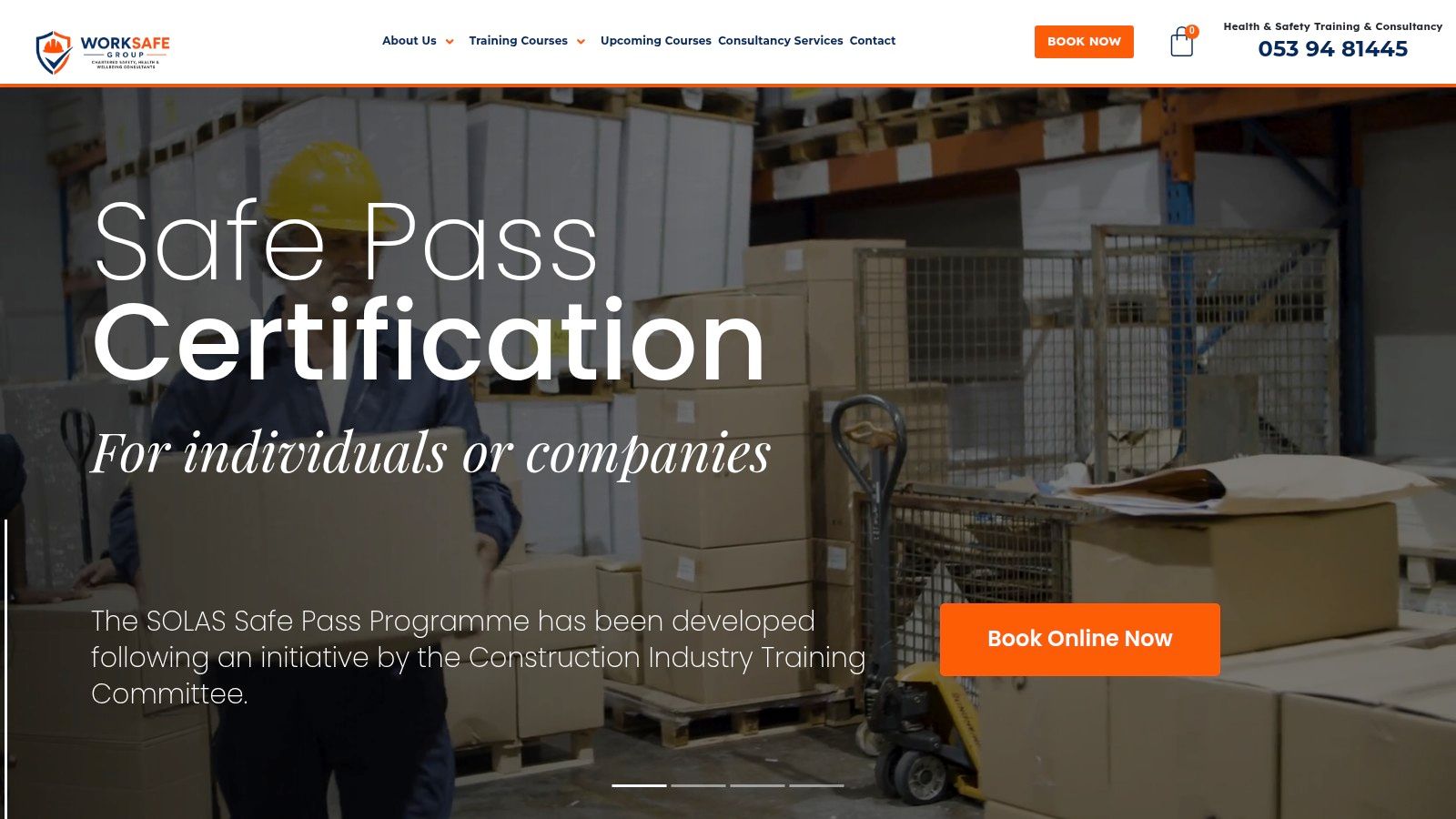
For a worker who needs baseline construction safety awareness, a tutor-led Safe Pass booking is a different purchase from bespoke induction content. WorkSafe Training Ireland offers public Safe Pass courses in Tallaght and Gorey, alongside employer group bookings and related workplace-safety training.
The HSA's Safe Pass guidance describes Safe Pass as a one-day safety-awareness programme required for craft and general construction workers, certain on-site security personnel and other prescribed groups under the Construction Regulations. That makes it a baseline credential for relevant workers, not evidence that someone can undertake every activity on site.
Where WorkSafe fits
WorkSafe suits individuals who can attend its published venues and employers arranging a group. Its related Manual Handling, First Aid and Fire Safety options may simplify administration, but each course should still have a separate purpose in the training matrix.
- Format: In-person, tutor-led Safe Pass with assessment, rather than an online substitute.
- Trade-off: Public-course availability depends on the listed locations and dates.
- Booking detail: Confirm the current fee, required identification and course-preparation instructions before committing the worker's time.
- Audit evidence: Record the resulting credential against the correct worker, not merely the invoice or attendance booking.
A Safe Pass course won't explain your traffic-management layout, welfare arrangements or local reporting route. Those belong in the site induction.
Keep fast induction training separate in your training plan: it should explain the workplace the starter is entering, rather than duplicate the general-awareness programme. Before mobilisation, distinguish what the worker has booked from what they've completed and what you've verified.
3. National Irish Safety Organisation (NISO)
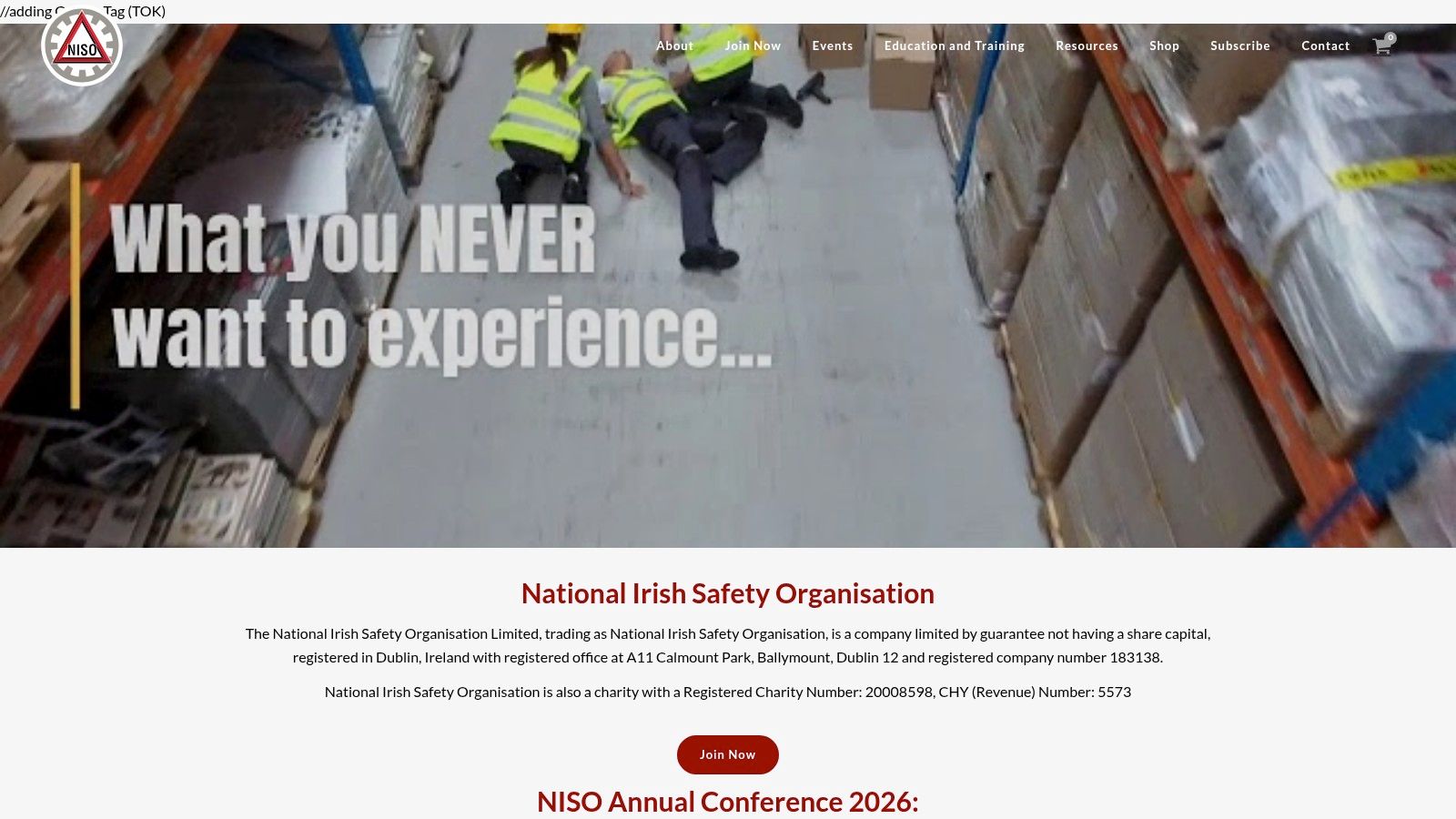
Travel can decide whether a sensible booking works. NISO lists Safe Pass venues including Dublin, Carlow, Clonmel and Kilkenny, giving learners regional alternatives rather than forcing every booking through Dublin.
For an employer coordinating starters across different counties, that geographical choice matters. Compare the venue with the worker's starting point, transport arrangements and planned mobilisation date, not just the course fee.
NISO offers online booking, with optional lunch and photo services listed for Dublin. Check the exact venue, current fee and selected extras at checkout; don't assume arrangements at one venue apply everywhere.
A convenient venue helps someone attend. It doesn't change what the qualification proves.
Separate awareness from task competence
Safe Pass establishes general construction safety awareness. It doesn't replace the separate training or competence evidence needed for activities such as plant operation or confined-space work.
That distinction matters when someone returns from training and a supervisor asks whether they're now cleared for a particular task. The answer must come from the worker's role, task requirements and verified credentials, not from the fact that they attended a broadly relevant course.
- Best fit: Learners seeking a regional public Safe Pass venue.
- Useful feature: Online booking with clearly selected venue-specific extras.
- Limitation: Neither the booking nor the general-awareness credential establishes specialist competence.
- Audit approach: Keep course and credential details in the worker's record, then identify any outstanding task-specific training separately.
NISO may also suit organisations seeking a broader safety-training relationship. Still, assess the particular course you're buying rather than treating the organisation's wider catalogue as evidence of what an individual learner has completed.
4. Shorcontrol Safety
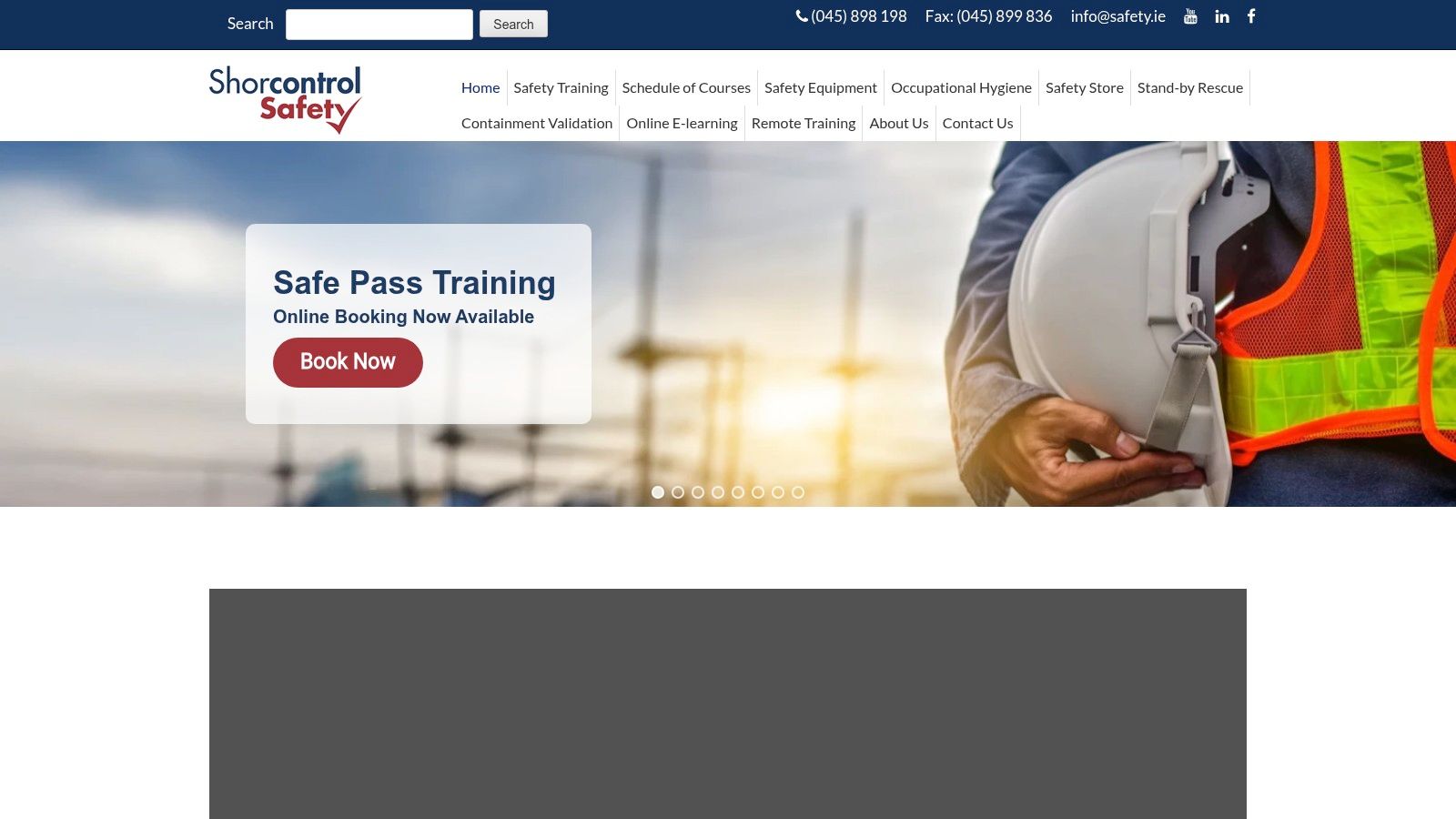
If your training matrix includes Safe Pass alongside confined-space or supervisory learning, Shorcontrol Safety offers a broader catalogue worth examining. Public Safe Pass dates are listed at its Naas facility, while private training can be arranged at the facility or a suitable client venue.
The advantage is coordination, not interchangeable certification. Keeping bookings with a provider that offers several subjects can reduce administrative handovers, but you still need to evaluate each course's scope, assessment and resulting evidence.
The HSA review of construction fatalities identified six deceased workers without a valid Safe Pass card and two workers undertaking specialist activities without the required CSCS training. Those findings don't establish that missing training caused the deaths, but they underline why generic attendance records aren't enough.
Compare the actual course deliverables
- Public-course fit: Naas is practical only if the learner can reach the venue reliably.
- Employer-group fit: A suitable client venue may make private delivery easier to organise.
- Wider needs: Confined-space and IOSH options deserve their own course-by-course assessment.
- Commercial detail: Confirm the full fee and any included registration charges for the selected booking.
For audit purposes, connect each credential to a defined requirement in the worker's role. A record labelled “safety training completed” is too vague to tell a supervisor whether someone has the evidence needed for an assigned activity.
Check identification and registration requirements before the course date. A preventable documentation problem can leave a planned booking unresolved just when the site expects the worker to be ready.
5. Ireland T&T
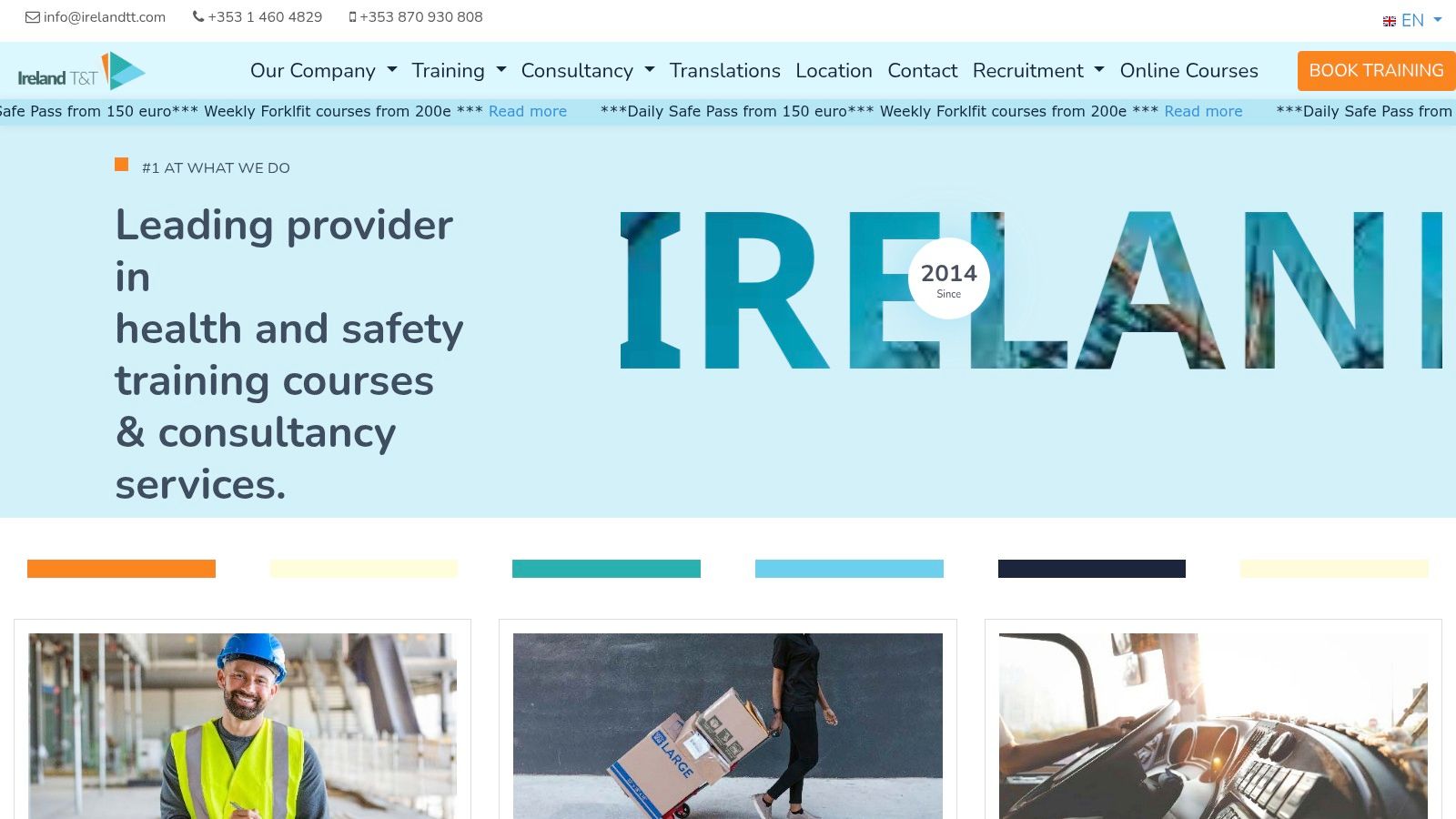
A worker can be present throughout a course without understanding the instruction well enough to use it. Language provision belongs near the top of the booking decision, especially when the learner must interpret hazard information and explain what they'd do next.
Ireland T&T lists multiple-language Safe Pass options, public courses in Dublin and Cork, and in-company delivery nationwide. Its wider catalogue includes Manual Handling, Working at Heights, Abrasive Wheels and plant-related courses.
For a mixed-language crew, establish the delivery language before selecting a date. Don't assume that a course available in a particular language on one occasion will be available in that language at every venue.
What to settle before booking
- Language and assessment: Confirm the language of instruction and how the learner will complete the assessment.
- Registration: Check whether a candidate without an Irish PPS number needs additional process-number documentation.
- Location and cost: Confirm the specific venue, delivery arrangement and total fee for that booking.
- Further training: Assess equipment-related courses separately against the worker's intended activities.
In-company delivery can reduce travel for a group, but it doesn't automatically make standard course content site-specific. You'll still need to brief workers on your emergency arrangements, supervision and local controls.
For the training record, capture the course title and delivery language alongside the resulting credential. Follow that with a practical conversation about the worker's actual task: ask them to explain the control measures and when they should stop and seek help.
That conversation supports supervision. It isn't a replacement for formal assessment or required certification.
6. Irish School of Motoring (ISM)
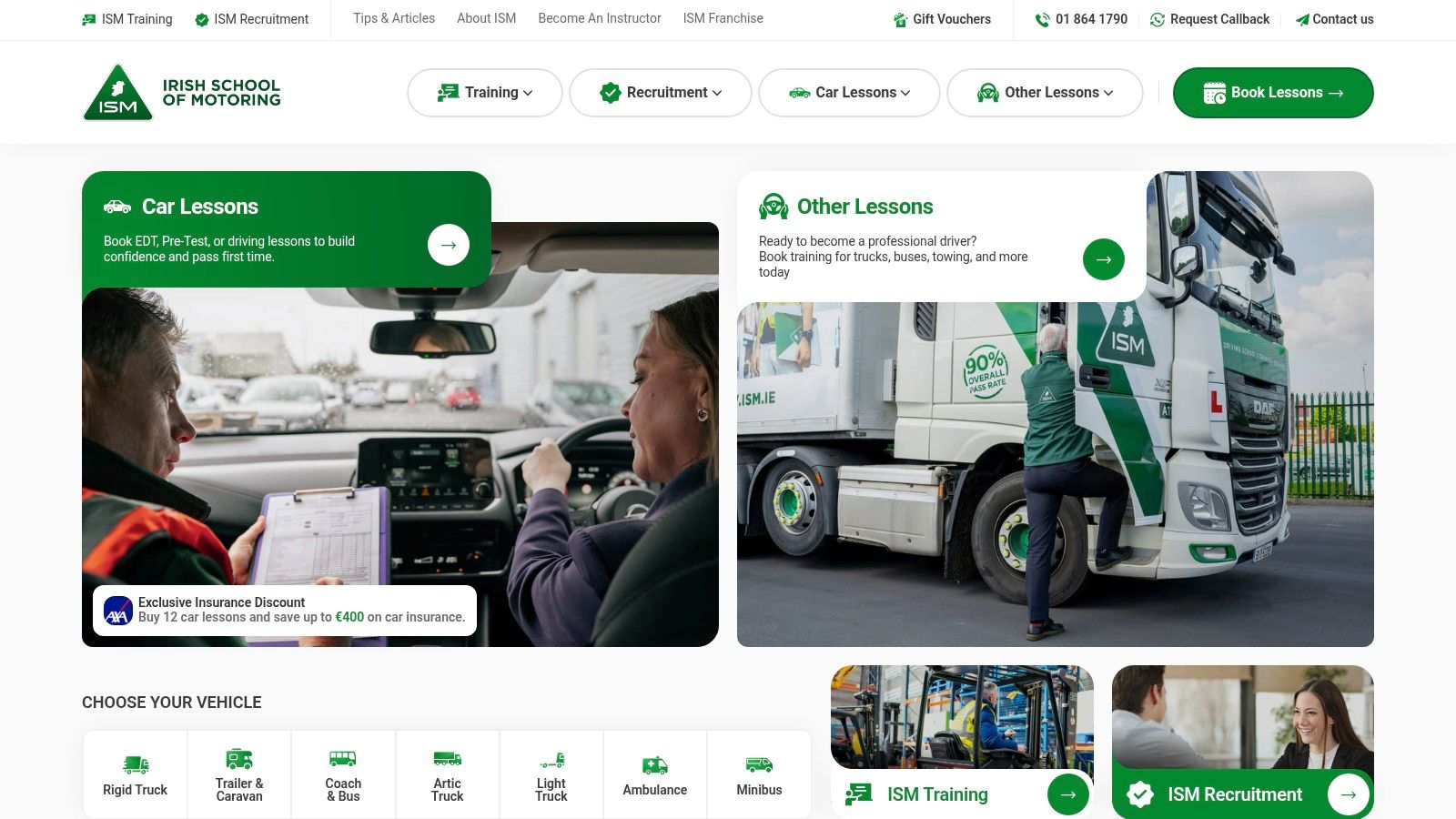
ISM is a classroom option for Dublin learners and employer groups considering off-site delivery. The Irish School of Motoring lists Safe Pass at Tallaght and Finglas, with client-location training available nationwide.
It also offers workplace-safety courses including Manual Handling, Fire Safety and Abrasive Wheels. That can suit an administrator coordinating several learning needs, provided the bookings remain distinct and the worker's record shows exactly what was completed.
English-language delivery is stated. Confirm support needs before booking, rather than relying on a supervisor to resolve a language difficulty when the learner arrives.
Booking judgement: Choose a classroom place the worker can attend and understand, not simply the earliest available seat.
Keep booking convenience separate from readiness
Public centres in Dublin won't suit every learner. Off-site delivery may be more practical for an employer group, but the venue, arrangements and current total cost still need agreement.
Safe Pass isn't available online through this option. A worker who needs that credential shouldn't be booked onto unrelated online awareness training as a scheduling workaround.
For evidence, separate the administrative stages:
- Booked: The worker has a confirmed place and the joining instructions.
- Completed: The course outcome has been established.
- Verified: The relevant credential details have been checked and recorded.
- Site-ready: Outstanding local induction and task-specific requirements have been addressed.
These distinctions prevent a common planning error: marking someone ready because their name appears on a booking spreadsheet. ISM's broader catalogue can help organise training, but a shared provider doesn't remove the need to check each course outcome separately.
7. Health and Safety Authority (HSA) Online Construction Safety Course
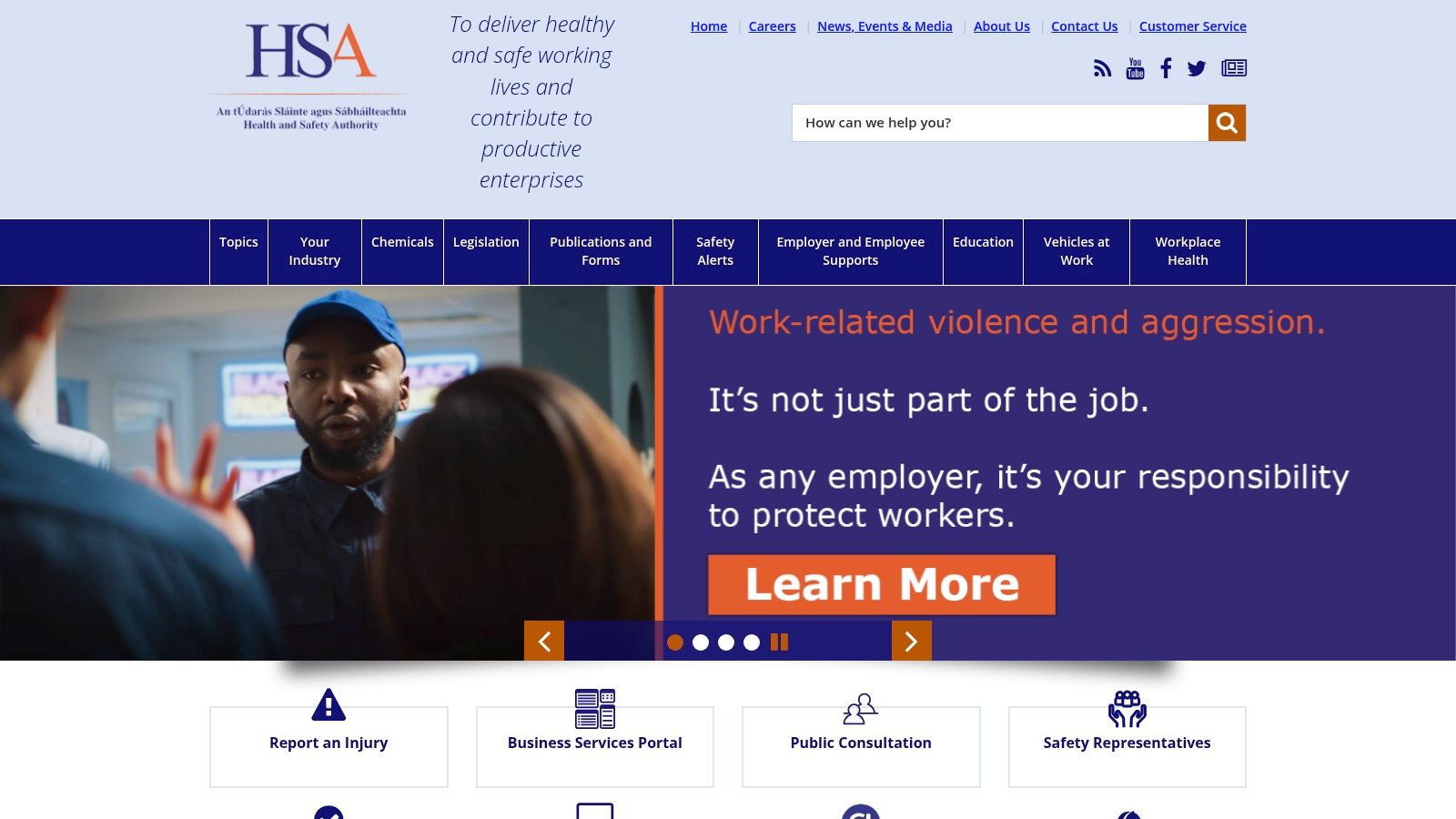
The HSA offers a free, self-paced online construction safety introduction through HSA Learning, particularly relevant to small contractors and self-employed people. It covers construction hazards and safety responsibilities, with a certificate available on completion.
Use it for introductory learning or a refresher, not as a Safe Pass replacement. Its practical advantage is flexibility: learners can work through the material without travelling to a scheduled classroom session.
The small-contractor focus matters: the HSA's programme of work reports that 19 of 23 construction deaths during 2022–2024 occurred on sites employing only one to four workers. A small crew still needs clear supervision and task controls, even when everyone knows each other.
Turn completion into a site conversation
After the course, use the learning to review the next job. Identify the task, the principal hazards, who supervises it and what would trigger a stop or a revised plan.
- Useful evidence: Retain the completion certificate and record the learning purpose.
- Certification boundary: The certificate isn't a SOLAS Safe Pass card.
- Practical limitation: Self-paced learning doesn't provide tutor-led practical instruction or demonstrate equipment competence.
- Follow-through: Check that workers can apply relevant controls to the work they're about to undertake.
Keep broader health and safety training tied to that same principle: select learning because it addresses an identified need, not because it produces another certificate.
This option works best as part of a layered training plan. It can introduce or reinforce knowledge, while recognised credentials, site briefings and competent supervision address their separate purposes.
How the seven construction safety training options compare on focus, format, listed price and best use
Compare each option by what it covers, how it is delivered and what evidence it provides. A listed fee is not enough to establish whether a course meets a particular role's requirements or replaces site-specific instruction. Confirm current fees at booking.
| Item | Course Focus | Delivery Format | Listed Price | Best For |
|---|---|---|---|---|
| Home: Bespoke Training Course Production | Custom workplace safety training | Bespoke production; editor-ready or finished LMS course | Not listed | Organisations needing tailored safety training |
| WorkSafe Training Ireland | SOLAS Safe Pass and workplace safety | One-day, in-person; Tallaght or Gorey; group bookings | Confirm current fee at booking | Learners near listed venues or employers booking groups |
| National Irish Safety Organisation (NISO) | SOLAS Safe Pass | One-day, in-person; several locations; online booking | Confirm current fee at booking | Learners seeking regional venues and online booking |
| Shorcontrol Safety | SOLAS Safe Pass and additional safety courses | One-day, in-person at Naas; private delivery at client sites | Confirm current fee at booking | Naas-based learners or employers seeking on-site training |
| Ireland T&T | Safe Pass and construction or equipment-related training | In-person; Dublin, Cork, or in-company nationwide; language options | Confirm current fee at booking | Diverse teams or employers arranging group training |
| Irish School of Motoring (ISM) | SOLAS Safe Pass and workplace safety | One-day classroom course in Dublin; off-site delivery available | Confirm current fee at booking | Dublin learners or employers seeking on-site delivery |
| Health and Safety Authority (HSA), Online Construction Safety Course | Construction hazards and safety responsibilities | Free, self-paced online course | Free | Small contractors, self-employed people, or learners seeking an introduction or refresher |
Safe Pass options listed here are in-person courses, while the HSA option is a self-paced introduction or refresher. These formats serve different purposes. Check the course's stated scope and the certificate or completion record it provides, then match that evidence to the training requirement.
For site induction and workplace procedures, a general course may not cover local arrangements. Bespoke training can address an organisation's own content, while public courses offer defined course formats. Record what the learner completed and keep local instruction distinct where it is needed.
Build Your Shortlist Around Proof, Not Just Price
The strongest shortlist may include different types of training rather than a single winning provider. Match each course to the role, the site and the evidence you'll need to show later.
For Safe Pass, compare accessible venues, suitable delivery language, registration requirements and confirmed total cost. For specialist work, establish the applicable certification and competence requirements separately. For site induction, explain the arrangements that a public course cannot know: access routes, restricted areas, emergency procedures and named supervision.
Don't confuse a national improvement with permission to relax local controls. The HSA's Construction Safety Action Plan records a 51% reduction in the average construction fatality rate, from 9.0 per 100,000 workers in 2019–2021 to 4.4 in 2022–2024. The practical response is continued attention to training, supervision and implementation, not certificates alone.
Build the record so another competent person can understand what the worker learned, what was verified and what remains outstanding.
For bespoke, procedure-specific instruction, we work from your approved operational brief, audience and jurisdiction. A qualified HSQE specialist reviews every claim before sign-off, and your internal approval remains central where the course explains local requirements or safety-critical actions.
AI generation doesn't itself prove legal compliance, accreditation or fulfilment of an employer's training obligations. Arrange qualified verification before using the material.
Finish the selection by assigning an owner to every gap. Someone should confirm credentials, someone should deliver the local briefing, and the task supervisor should know which activities the worker is authorised and competent to undertake. That is more useful than choosing the lowest headline fee and discovering the missing evidence at the gate.
Loresson turns your approved procedures and construction learning needs into bespoke scripts, storyboards, narration, assessments and coordinated course media. Visit Loresson with your audience, jurisdiction and deadline to request a quotation; launch availability for 30-minute bespoke builds is limited.